
 12 Comments







· 14/04/2026
"When can I apply for Peruvian citizenship?
Religious visa holders can currently apply for Peruvian citizenship by naturalization after two years of legal residency in Peru.
However, a new nationality law approved in August 2025 increases the required residency period to five years. The law is not yet in force, but it may become applicable in the near future."
Religious visa holders can currently apply for Peruvian citizenship by naturalization after two years of legal residency in Peru.
However, a new nationality law approved in August 2025 increases the required residency period to five years. The law is not yet in force, but it may become applicable in the near future."
Hi Eva, first, thanks for your help via Lima Easy over the past couple years! It's been such a blessing to me personally and to another friend (I recommended it to) who came into the country as a missionary as well.
I've been trying to figure this one out but don't know exactly what to do just yet. I have been here for over 2 years on a religious visa and I am wondering if the next best step is to a) apply for citizenship to obtain a DNI and nix the entry/exit requirements/renewal/approval process among other benefits of having a DNI or go for b) a "Cambio de calidad migratoria a permanente residente (religioso residente) when I hit the 3 year mark in October this year?"
My opinion is that life functions better here with a DNI vs a Carnet de extranjeria. I've been scouring all your pages but can't find a link to an article about either of those options to understand them better. Maybe I just haven't found the links yet? Anyways, with the new law taking place potentially, I have a few questions:
-What would be your recommendation to me?
I'm leaning towards applying for citizenship but I don't know what all that entails since I haven't found an article on it? Should I try to do that before the requirement jumps to 5 years? Or should I just wait and go for the "religioso residente" which I assume would still leave me with a Carnet de extranjeria?
Thanks so much!
- This commment is unpublished.
 · 14/04/2026@Preston Harrington Hello Preston,
first of all, thanks so much for your kind words and for taking the time to leave a comment on LimaEasy. It’s great to hear that the site has been helpful to you over the years and even more that you recommended it to a friend. I really appreciate it.
Now to your situation: Thinking about your future in Peru and what the next legal step could be is absolutely understandable. However, without knowing more about your personal situation, it’s difficult to clearly recommend one option over the other.
Applying for Peruvian nationality by naturalization and becoming a Peruvian is a big step. While Peru generally allows dual nationality, your home country might not. So, the first thing I would check is whether your country allows you to keep your original citizenship or if you would have to renounce it; this alone can already be a deciding factor.
Becoming a Peruvian does come with some clear advantages, especially if you plan to live in the country long-term or even for life, be a part of Peruvian society and travel abroad for years without worrying about losing your status.
Advantages include, for example:
- You get a DNI instead of a Carné
- No more visa renewals, extensions, or migration procedures
- No more entry/exit restrictions or minimum stay requirements
- You gain the right to vote and run for most local and regional offices
- You can own land in restricted zones
- In general, daily life is easier (banking, contracts, admin processes)
- You can travel to member countries of the Andean community and Mercosur for tourism only with your DNI
- Thanks to the Andean Migration Statue (CAN) and the Mercosur Residence Agreement Peruvians can quite easily apply for a Temporary Andean Residence / a two-year temporary residency based solely on Peruvian nationality in member countries of the Andean community / Mercosur.
However, there are also a few challenges and downsides to keep in mind:Application process:Even though the process was simplified a few years ago, it is still more complex and stricter than applying for permanent residency. Rejection of presented documents are common. Additionally, several Peruvian institutions are involved, including Migraciones, the Ministry of the Interior and even the President’s office. So, expect the whole process to take quite some time, often many months, sometimes a year or more.
You also have to pass a Spanish language and Peru knowledge test (mostly about Peruvian history and culture).
Additionally, applicants are expected to show a yearly income of 10 UITs (in 2026 this equals S/. 55,000). However, as a religious visa holder, there is an exception. Instead of proving income you must present a sworn statement, the so-called Declaración jurada de sustento exonómico, This sworn declaration of economic support must be issued by your religious organization or congregation.Living in Peru as a Peruvian:Once you become Peruvian, you are treated as such; this can be an advantage, but also a disadvantage in certain situations. For example, in case of problems or emergencies, your home country’s embassy usually won’t assist you anymore.
Also, while voting is often seen as a right, in Peru it is actually an obligation. If you don’t vote, you will have to pay a fine (unless you are officially registered as living abroad).
Though military service is currently voluntary, citizens are subject to national mobilization laws in times of emergency.
You find the exact requirements to apply for the Peruvian nationality in the current TUPA on page 174.
The other option - changing your status to permanent resident after 3 years - is usually the more straightforward and less demanding route.
Compared to citizenship, this process is simpler and quicker and probably the better option if you just want the stability of living in Peru indefinitely but prefer to keep your original nationality.Application process:The application process is much more straightforward and usually approved within 2 to 3 months
No exams (no language or Peru knowledge test)Living in Peru as a permanent resident:Once you are a permanent resident, you don’t have to renew your resident visa, so, the permit that allows you to legally live in Peru, anymore. You can stay in Peru indefinitely.You maintain your original nationality and passport without any conflict of interest or loyaltyYou have almost all the same rights as citizens regarding healthcare (SIS or EsSalud), and private legal contracts.You can vote in municipal elections.
Things to keep in mind:You will still just have a Carné not a DNI; so you remain a foreigner in Peru and once in a while need to interact with Migraciones, for example, to keep your information updated (address changes, civil status, etc.)You must renew your carné, so the physical card, every 5 years.You cannot stay outside the country for more than 365 days.You don’t have a political voice and cannot vote in national elections or hold public office.As you apply for a permanent residence visa based on your religious activities you are not allowed to work or receive a remuneration for professional activities, unless you apply for the special work permit.With that being said, it’s really up to you whether you want to go for Peruvian citizenship or opt for permanent residency. If you’re seriously considering applying for Peruvian nationality, it might be a good idea to do it sooner rather than later, so, before the new nationality law come into force.
Greetings
Eva
- This commment is unpublished.
 · 15/04/2026@SunflowerWow!! Thank you for taking time to list all of those things out! That’s really helpful information for taking a next step.
Now that I know some of the requirements for Peruvian citizenship, I will probably just stick with the permanent residence visa when the time comes about.From the FAQ section “This process is called Cambio de calidad migratoria a permanente residente (religioso residente). Once approved, you receive indefinite residency and no longer need to extend your visa each year.” Is there a page or link with step-by-step instructions to go about this process?
Thanks again for your responsiveness and all the details you add into all your comments for everyone who is asking questions. - This commment is unpublished. · 15/04/2026@Preston Harrington Hello Preston,
no, sorry, there is no article about the permanent residency.
But actually it's not so different from when you applied for your religious visa. It's the same procedure; a Cambio de calidad migratoria only this time to permanente residente (in your case religioso residente), so the required documents are slightly different.
Requirements include:
- Criminal record check with Apostille
- Request from the religious entity recognized by the Peruvian State to which the applicant will genuinely and effectively integrate, signed by its legal representative; specifying the beneficiary’s full name and the length of time they will remain in the country.
- Sworn statement from the legal representative of the religious organization or congregation confirming the details of the official registration of the entity and his or her power of representation, or an official document confirming these powers.
- Sworn statement of economic solvency / economic support
- Carné (residence visa and carné must be valid)
- Receipt for the paid application fee (Authority: Migraciones; Code: 07568 - Cambio de calidad migratoria; Concept: Cambio de calidad migratoria permanente residente; Fee: S/ 161.40 (2026)
- Ficha de canje; please note that in 2023, the requirement to present the Ficha de Canje (Interpol) was declared an illegal bureaucratic barrier for permanent resident visa applicants. About a year later, the corresponding field on the Migraciones Agencia Digital, where applicants previously had to upload the document, was removed. As a result, permanent resident visa applicants - at least currently - cannot submit the Ficha de Canje through the system. However, be aware that the Ficha de Canje is still listed among the official requirements, as it continues to have a legal basis in the Foreigner Law. Therefore, the upload field could be added again at any time, or Migraciones may request the document separately during the application process.
The process is quite straightforward.
Get all documents, pay the fee and then apply through the Agencia Digital. So, enter the Agencia Digital, on the main page in the left-hand menu, go to Cambio de calidad migratoria and select Permanente Residente. On the next page choose the Migraciones office. The next step is to upload all required documents.
One tip: Before you get all documents I listed above, best check and verify the exact current required documents by simply clicking through the different tabs on this page. Once finished, leave the page without submitting anything.
To continue with the application, just upload requested documents, click Siguiente, confirm your application and download the Registro de Solicitud de Cambio de Calidad Migratoria.
As you will get a new carné you may be asked to schedule an appointment to have your biometric data taken again (if your current carné was issued recently, Migraciones may use your biometric data saved in their system). Then just wait for approval and pick up your new carné.
That's it.
Greetings
Eva
- This commment is unpublished. · 16/04/2026@Sunflower Ok that sounds good! I’ll be sure to circle back to all these details when the time comes.I think this is my last question, and I am assuming that one does have to be in the country and cannot leave during the application and the approval process, but “the application process is much more straightforward and usually approved within 2 to 3 months.” Would I have to be in the country without leaving during that time period?
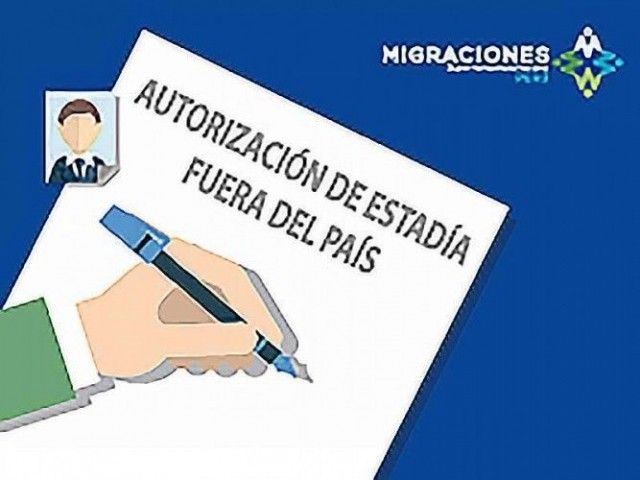
- This commment is unpublished. · 16/04/2026@Preston HarringtonHello Preston,you must be in Peru when you apply for the change of your immigration status to permanente.If you need to leave Peru while your application is being processed, you must first apply for a special travel permit, the Permiso Especial de Viaje (also called Autorización de estadía fuera del país). Leaving the country without this authorization automatically cancels your pending application.The Permiso especial de viaje / Autorización de estadía fuera del país is valid for one exit and one re-entry only.
It is valid for 30 days from the declared departure date.
It cannot be extended.
If you remain outside Peru longer than the permitted 30 days, your application is automatically canceled.Our article Travel permit explains the details and the application process.Hope this helps.GreetingsEva