
36 Comments
How to renew your Peruvian residence visa

Residence visa extension in Peru

Renewing your resident permit: requirements and process

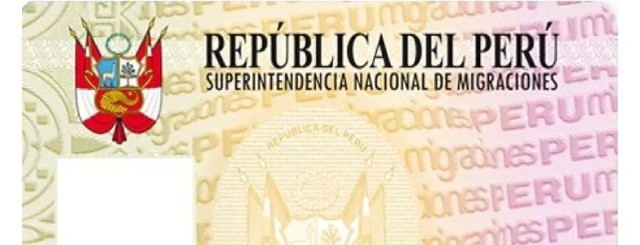
In Peru, a residence visa - so, the permit that allows you to legally live in the country - is usually valid for only one (1) year and must then be extended. This residence permit is not the same as your carné, the physical ID card, even though both are closely connected and often confused.

Since the introduction of the Migraciones Agencia Digital, applying for the renewal of a residence visa has become a relatively straightforward and quick online process. However, misunderstandings about validity dates, missed deadlines, or missing documents can still cause unnecessary stress or even put your residency at risk.

This article explains the difference between your residence visa and your carné, when and how your residence visa must be renewed, and which documents are required depending on your visa type. In the second part of the article, you’ll find a detailed step-by-step guide showing you exactly how to submit the renewal application online.


Table of contents


General information about the residence visa and the carné

Many foreigners legally living in Peru are unaware that there is a crucial difference between the expiration of their carné (the ID card) and the expiration of their residence visa (the actual permit allowing them to live in the country).

When receiving their carné for the first time, people often look at the date labeled Caducidad and assume this is the date until which they are allowed to stay in Peru, completely overlooking the Vencimiento de Residencia.

To avoid confusion, we highly recommend reading our glossary article Carné de Extranjería. In short:

Caducidad is the expiration date of the card itself, not your residence visa.

  • The carné is usually valid for four (4) years; three (3) years for minors; five (5) years for permanent residents and must then be renewed.
  • The process for renewing the card is explained in our article “Renewal of the Carné.”

When your Peruvian residence visa is approved, you receive a Carné de Extranjería, Peru’s foreigner ID card. While many residents assume the card a...

The Vencimiento de Residencia, on the other hand, is the date your residence visa expires.

  • A residence visa is usually valid for one (1) year.
  • An exception applies to family visas based on marriage to a Peruvian citizen, which are usually valid for two (2) years.

Unfortunately, this date is no longer printed on the carné. You must check it online, either by:

  • scanning the QR code on the back of your carné, or
  • using this direct link, or
  • logging into the Agencia Digital, selecting Consultas en Línea and there Carné de Extranjería from the left-hand menu.

So even if your carné (the card) is still valid, you must renew your residence visa every year (or every two years, depending on the visa type). Without a valid residence permit, the carné - even if still valid - is essentially meaningless.

You can apply for the extension of your residence visa up to 30 days before it expires. We strongly recommend doing so on time. If you apply late, Migraciones may charge a fine of 1% of one UIT per day; so S/ 55 in 2026 for each day you are late.

Please also note that you can only apply for a residence visa extension while physically in Peru.

Thanks to the Agencia Digital, extending a residence visa is now a simple, standardized online procedure. The application process itself is the same for all visa types, only the requirements differ.


Requirements for the renewal of your residence visa

The official requirements for extending a residence visa are published on the Peruvian government website under Prorroga de residencia segun calidad migratoria (select your visa type). As this website is not always fully up to date, you may also consult the current TUPA, where you can find the requirements:

  • Resident workers: page 36
  • Family visa holders:
    • adults: page 33
    • minors: page 47
  • Resident students: page 44
  • Resident religious: page 42

All official sources are, of course, in Spanish. Below you’ll find the requirements translated into English.

That said, anyone who has been in Peru for a while knows that Migraciones frequently changes requirements and modifies the Agencia Digital - sometimes without prior notice. To avoid unnecessary work (or scrambling to obtain documents that are no longer required), we strongly recommend first logging into the Agencia Digital, following the application process as described in our Step-by-step application guide up to Step 4, and checking which documents are actually requested by clicking through the requirement tabs. Once you’ve verified this, simply exit the application and prepare only what is truly needed.


Requirements for a resident work visa renewal

General requirements:

  • Receipt for paid application fee
    • Authority: Migraciones
    • Code: 07566 - Prorroga de residencia
    • Concepto: trabajador residente
    • Fee: S/ 20.20 (2026)
  • Passport
  • Carné
  • Sworn statement declaring that you do not have a criminal record in Peru or abroad

For dependent workers, additionally:

  • Work contract valid for at least one (1) year and approved by the Ministry of Labor (approval not required for “exonerated workers”)
  • Payslips from the last three months
  • SUNAT documents for the last three months (these can be downloaded from the SUNAT digital platform):
    • Reporte de rentas y retenciones
    • Consulta de contribuciones y retenciones de trabajadores
    • Even though the Agencia Digital suggests that uploading the work contract is sufficient, readers reported that Migraciones requested the SUNAT documents as well.

For independent workers, additionally:

  • Service contract valid for at least one (1) year.
  • Recibos por honorarios from the last three months.
 

Requirements for a family visa renewal (based on marriage)

  • Receipt for paid application fee
    • Authority: Migraciones
    • Code: 07566 - Prorroga de residencia
    • Concepto: Familiar residente para personas extranjeras mayores de edad
    • Fee: S/ 20.20 (2026)
  • Passport
  • Carné
  • Sworn statement declaring that you do not have a criminal record in Peru or abroad
  • Marriage certificate (although still listed as an official requirement, in practice Migraciones usually no longer asks for a recent copy).

If you are applying for the extension of a family visa for a minor, the application process itself is the same as described below (you must log in using the child’s carné number). However, the requirements differ - for example, the payment concept is familiar residente para menores, a birth certificate is sometimes required, and the parent applying on behalf of the minor must enter additional personal information.


Requirements for a resident student visa renewal

  • Receipt for paid application fee
    • Authority: Migraciones
    • Code: 07566 - Prorroga de residencia
    • Concepto: Formación residente
    • Fee: S/ 20.20 (2026)
  • Passport
  • Carné
  • Sworn statement declaring that you do not have a criminal record in Peru or abroad
  • Proof that you are studying, interning, or completing an apprenticeship in Peru:
    • Students: enrollment certificate issued by a recognized Peruvian educational institution, including the name, type, and duration of studies
    • Exchange students: official letter from the recognized Peruvian host institution, including name and duration of studies
    • Interns: official letter from the Peruvian company, including the name, type, and duration of the internship/apprenticeship, as well as the name of the home university
  • Report of already taken courses and grades issued by the recognized Peruvian educational institution (even though no longer on the official requirement list, this may still be required to be uploaded when applying)
  • Sworn statement confirming sufficient financial resources to fund the studies in Peru
    (Declaración jurada de solvencia económica)
 

Requirements for a resident religious visa renewal

  • Receipt for paid application fee
    • Authority: Migraciones
    • Code: 07566 - Prorroga de residencia
    • Concepto: Religioso residente
    • Fee: S/ 20.20 (2026)
  • Passport
  • Carné
  • Sworn statement declaring that you do not have a criminal record in Peru or abroad
  • Request issued by the religious entity where the applicant is based in Peru, recognized by the Peruvian state, signed by its legal representative and including the applicant’s full name and intended length of stay.
  • Sworn statement from the legal representative confirming the entity’s official registration and his or her authority to act, or an official document proving such authority
 

Step-by-step guide to renewing your residence visa

Before submitting your application

Before starting the online application, create PDFs (maximum size 3 MB) from all required documents.

Then pay the administrative fee of S/ 20.20 (2026) for the Migraciones procedure Prórroga de residencia under code 07566.

Payment can be made either online via págalo.pe, or in person at any Banco de la Nación branch.

As you have likely already paid Migraciones fees before, you’ll be familiar with the process. If not, you can find detailed instructions in our article “Paying administration charges and processing fees in Peru.”

All administrative charges, processing fees, and fines levied by Peruvian government agencies, public authorities, and public entities must be paid...

Once payment is completed, keep the receipt and your documents handy - you will need them during the application.


Step 1: Access the Migraciones Agencia Digital

Go to the Migraciones Agencia Digital and click Entrar.

On the next page, select Extranjero and fill in the following fields:

  • Documento
    Select the document you used to enter Peru or that is registered with Migraciones (usually pasaporte or carné).
  • Número de documento
    Enter your passport number or CE number.
  • Fecha de nacimiento
    Enter your date of birth.
  • Nacionalidad
    Select your nationality. Country names are listed in Spanish (for example, EE. UU. for the United States, Alemania for Germany).
  • Último movimiento migratorio de entrada
    Enter the date you last entered Peru.
  • Código captcha
    Complete the captcha.

Click Verificar.


Step 2: Select the residence visa renewal procedure

You are now on the main page of the Agencia Digital.

  • Either use the search bar, or
  • In the left-hand menu, go to Prórroga de residencia and select your current visa type.

Click on it to continue.


Step 3: Choose the Migraciones office and generate your update code

You are now on the Prórroga de residencia - Dependencia page.

Fill in the required fields:

  • Seleccione la dependencia donde desee gestionar su trámite
    Select the Migraciones office that should handle your application (for example, Lima, Cusco, Arequipa).
  • Ingrese código de actualización
    If you do not already have a current data update code, click the link “Obtenga aquí su código de actualización de datos” below the field.

A new tab opens, taking you to the Sistema de Actualización de Datos page.

Click the Sistema de actualización de datos button and fill in the requested fields:

  • Tipo de documento
    Select pasaporte.
  • Número de documento
    Enter your passport number.
  • Nacionalidad
    Select your nationality (listed in Spanish).
  • Sexo
    Select your gender.
  • Fecha de nacimiento
    Enter your date of birth (dd/mm/yyyy).
  • Captcha
    Complete the captcha.

Accept the terms and conditions and click Continuar.

A pop-up window will appear showing your actualización code. Copy this code.

Return to the original tab with the Prórroga de residencia application, paste the code into the field, and click Siguiente.


Step 4: Upload required documents

Here you must enter required information and upload the necessary documents as PDFs.

If you only want to check or verify the current requirements, you can do so here by clicking through the different tabs. Once finished, simply leave the page without submitting anything.

To proceed with your application, click the small arrows next to each requirement. Depending on the document, additional fields may appear. Fill in the requested information and upload the corresponding PDF.

Under “Pago por derecho de trámite”, you must enter information from your payment receipt:

  • Número de recibo
    This corresponds to the secuencia de pago on the págalo receipt.
  • Código de verificación
    This is the código de control on the págalo receipt.
  • Fecha de recibo
    This is the fecha de operación on the págalo receipt.

After entering the information, click Validar.

Under Documento de Identificación, in most cases you only need to upload a PDF of your carné.

Depending on your visa type, you must upload additional documents under the remaining tabs.

Once all required documents are uploaded, each tab should show a green check mark. Accept the terms and conditions and click Siguiente.


Step 5: Review and confirm your personal information

You are now shown a summary page with your personal details already filled in.

The only fields you can edit here are:

  • your mobile phone number, and
  • your email address.

If everything is correct, click Guardar datos y generar trámite.


Step 6: Application confirmation

Your Solicitud de prórroga de residencia will now be displayed on the screen. This document confirms that your application for the residence visa renewal was successfully submitted.

At the top right, below the barcode, you’ll find your Número de expediente (also sometimes called Número de trámite).

Download and/or print this document and keep it safe.


After submitting your application

According to Migraciones, the official processing time for approving (or denying) a residence visa extension is five business days. In practice, however, most applicants receive the notification in their Buzón Electrónico within two to four weeks.

Check your Buzón electrónico regularly to make sure you don’t miss any notification.

You can also check the status of your application:

And finally, if you haven’t received a notification but want to make sure your extension was processed, you can check the validity date of your residence visa by viewing your carné status:

  • in the Agencia Digital under Consultas en Línea and Carné de Extranjería, or
  • on the Migraciones website under Consultas en Línea.
 

Please note: LimaEasy is not a Peruvian government agency, public authority, or law firm. The information provided is based on our best knowledge and is intended as general guidance to help you understand Peruvian immigration regulations and procedures. Regulations, requirements, and administrative practices may change at any time and without prior notice, so we recommend verifying current details with the relevant authorities before acting on this information.

And last but not least: If you notice any inaccuracies or outdated information on this page, please help us keep this guide up to date by leaving a comment below or contacting us via our contact form. Thank you for your support!


Say something here...
characters left
or post as a guest
All comments MUST be in English and will be moderated before publishing.
They will appear below within 24 hours.
Loading comment... The comment will be refreshed after 00:00.
  • This commment is unpublished.
    Aryn · 19/04/2025
    Hello!  I am working on extending my husband's and my religious resident visas (thank you for your super helpful website which was a key resource in getting them in the first place) and have a question on the letter from the religious organization: 

    Can I use the original letter that we got last year to get our visas (the original letter said we would be in the country for up to 5 years) or do I need a whole new/different type of letter in addition to the declaracion jurada from the legal representative? 
    The TUPA lists the requirement as: "4.- Presentar la solicitud de la entidad religiosa reconocida por el Estado peruano a la que real y efectivamente viene a integrarse, suscrita por su representante legal; precisando nombres y apellidos del beneficiario y el tiempo que permanecerá en el país." but I am unclear on whether the original letter fulfills this purpose or if I need a different one.  We had to go to a third party to get the original letter and they are wanting to charge us a hefty fee for issuing new letters now, which they say are necessary but I want to be sure because I thought I could re-upload the original letter and just get a new declaracion jurada....  
    Any insight you have on this would be much appreciated!

    -Aryn 
    • This commment is unpublished.
      Sunflower
      • LimaEasy
      · 19/04/2025
      @Aryn
      Hello Aryn,

      great to hear that LimaEasy helped getting your residence visa in the first place. Compared to that applying for the extension is a walk in the park.

      However, I'm really sorry, but no, you can't use the letter from last year.

      Documents have an "expiration" date in Peru. If not stated otherwise, documents issued in Peru (such as your letter from the religious organization or the sworn statements) are only accepted by Migraciones when they were issued a maximum of 3 months prior to your application/to being submitted on the Agencia Digital.

      So, you will need  a new letter, which should be on an official letterhead and must be signed by the legal representative of the religious entity and must include your name(s) and surname(s) as well as the time of your stay in Peru.

      Sorry, I don't have better news for you.

      Greetings
      Eva

    • This commment is unpublished.
      Aryn · 19/04/2025
      @Sunflower Eva,
      Ok, thanks for confirming and for the super quick response!  I just wanted to make sure what they were telling me was correct before I paid anything.  Will proceed then!

      -Aryn 
    • This commment is unpublished.
      Sunflower
      • LimaEasy
      · 19/04/2025
      @Aryn
      Have a nice Easter weekend.
      Eva
    • This commment is unpublished.
      Sunflower
      • LimaEasy
      · 01/05/2025
      @Aryn
      Hello Aryn,

      as far as I know there is no way to somehow check online which documents were submitted. Sorry.

      The most important question is if the person, who presumably applied for your extension, really did so. Do you have the numero de tramite, the application date and the verification code, access to your Buzon electronico? If not, ask for it. If you don't get it, the person might not have applied. And in case your residence visa  is expired by now or on the day you finally apply, expect to pay a hefty fine (when I remember correctly it's 1% of an UIT, which would be S/ 53.50 per day (!) you extend too late).

      Anyway, if you don't get the numero de tramite and the application date from the person who (might have) applied for you, first check if there is an application under your name pending. Enter the Agencia Digital and after the log-in page click on Historial tramite (on the main page in the left menu). There you should find all your applications and hopefully as well the application for the extension. You as well see there the numero de tramite and can download the confirmation of the application.

      If you got the numero de tramite from the person, who applied for you, or if you saw it on the Agencia you know that there is an application pending. Good news. In this case you could just wait and regularly check your Buzon electronico (if you have the log-in data; if not you can recover it, see our Buzon electronico article) . If Migraciones isn't happy with the application or if documents are missing they send a notification and you could then upload rejected or missing documents. No big deal. But check the Buzon regularly to not miss any notification including the approval of your extension.

      Did you give the person, who presumably applied for you, a power of attorney? Otherwise he wouldn't be able to apply for you. So, personally I probably still would contact Migraciones - best in person - to withdraw the power of attorney of that person. For that you shouldn't have to do it in Lima, a Migraciones office wherever you are should be able to help when you explain your situation. But probably don't mention that you got the letter from a third party. Sounds a bit fishy and Migraciones could get suspicious.

      Furthermore, that the extension was hopefully done, but in Lima, shouldn't be a problem as you don't have to be present at the Migraciones office at any time.

      And if you cannot find any application under Historial tramite the person might not have applied at all. So, you should apply for your extension as soon as possible as the fine for applying to late is adding up quickly.

      I hope everything works out smoothly.

      Greetings
      Eva
  • This commment is unpublished.
    Stefan Herzberg · 16/04/2025
    Hi Eva,
    You have been helpful when I applied two years ago for a residence visa. I observed the 183 days rule and my visa was extended for another two years last week.
    Being married to a Peruvian I now would have the option to obtain the Peruvian Nationality which I Not intend to do. But Next year I can apply for a permanent residency.
     Now my question is if the 183 days rule still applies to people who have a permanent carnet de extranjería..
    I highly would appreciate your comment.
    Best regards
    Stefan Herzberg
    • This commment is unpublished.
      Sunflower
      • LimaEasy
      · 16/04/2025
      @Stefan Herzberg
      Hello Stefan,

      great hearing from you again. I assume with the 183-day rule you mean the maximum time you as a resident visa holder can stay outside Peru. 

      If you change your visa residente familiar to a visa residente permanente, which you can do after three years of legal residency,  you can stay outside the country for up to 365 days without losing your residency.

      You find this in the Foreigner Law, article 33.2 (see attached screenshot).

      I hope this is the answer you were looking for.

      All the best
      Eva
    • This commment is unpublished.
      Stefan herzberg · 17/04/2025
      @Sunflower Exactly what I was looking for!
      Thank you very much!
      Best regards
      Stefan
    • This commment is unpublished.
      Sunflower
      • LimaEasy
      · 17/04/2025
      @Stefan herzberg
      Perfect.

      Enjoy Easter!

      Greetings
      Eva
  • This commment is unpublished.
    Ellie · 31/03/2025
    Hi there, thank you so much for the helpful information. When you say "You can apply for the extension of your residence visa up to 30 days before it expires." does that mean we can only renew it 0-30 days before the expiry date? Or does it have to be renewed at least 30+ days before the expiry date? E.g. if the expiry is 31st May 2025, do we have to apply before or after 30th April 2025? Just want to make sure we renew on time as previously our lawyer did this for us. Thanks so much!
    • This commment is unpublished.
      Sunflower
      • LimaEasy
      · 31/03/2025
      @Ellie
      Hello Ellie,

      you can apply for the extension of your residence visa up to 30 days before it expires; not earlier.

      So, if your residence visa expires on May 31, you can apply earliest May 1 and latest May 30. You cannot apply before May 1 and if you apply after May 30 you will have to pay a hefty fine for each day you extend late (in 2025 that would be S/ 53.50 per day)

      Greetings
      Eva
    • This commment is unpublished.
      Ellie · 01/04/2025
      @Sunflower Hi Eva, thank you so much for the clarification. Much appreciated!
  • This commment is unpublished.
    Neil Giardino · 15/11/2024
    Hello Kat, 

    You've been so helpful. I want to ask you hopefully the last of my migration questions. I have a valid carnet de extranjeria. In 2024, I have left Peru three times. During my most recent exit from Peru, I will have been gone for just shy of 6 months (exactly 180 days). 

    As I have not exceeded 183 *consecutive* days this final trip, and will return to Lima in early December, do you think I will be ok to return with my residency status still valid?

    Any insight greatly appreciated. Thanks. Neil.
    • This commment is unpublished.
      Sunflower
      • LimaEasy
      · 15/11/2024
      @Neil Giardino
      Hello Neil,

      as long as your residence visa is still valid (not your carné; I explained the difference between "caducidad" (expiration date of your carné) and "vencimiento" (expiration date of your residence visa) in my previous replies) and you haven't been outside Peru for more than 183 days in a 365-day period (usually counted from the day your residence visa was approved), then you are fine and will have no problem entering the country as a resident.

      However, if your residence visa is expired or if you have been outside Peru for more than 183 days in a 365-day period, then it's up to the immigration officer, if he/she let's you enter as a resident.

      Be aware, while the law stipulates that residents can't be outside the country for more than 183 consecutive (!) days, in practice Migraciones usually adds all days you have been abroad in the 365-day period, so they count with accumulated (!) days.

      Greetings
      Eva
    • This commment is unpublished.
      Neil Giardino · 16/11/2024
      @Sunflower Hi Eva, 
      You have been so helpful. Thanks :) Caudacidad and vencimiento both still valid. 
    • This commment is unpublished.
      Sunflower
      • LimaEasy
      · 16/11/2024
      @Neil Giardino
      Good, then you shouldn't have a problem returning to Peru as a resident.

      All the best
      Eva
    • This commment is unpublished.
      Neil Giardino · 16/11/2024
      @Sunflower Hey Eva, quick follow up -- the rest of my message was cut off for some reason. What I wrote was: both are valid. But in all 2024, I have traveled a bit over 183 days on three trips. That said, my carné was issued in April of 2024 and in that time, upon my upcoming return, I will NOT have exceeded 180 days. Still should be good? Of course, depending on the migration officer as well, I'd imagine. 
    • This commment is unpublished.
      Sunflower
      • LimaEasy
      · 17/11/2024
      @Neil Giardino
      Neil, Peru doesn't count in calendar years, so how long you have been outside Peru in 2024 is irrelevant. The important thing is how many days you stayed outside Peru since you got your residence visa. If it was less than 183 days you are fine.

      So, let's assume you got your residence visa on April 15, 2024. To remain your residency, you can only stay outside Peru for a max of 183 days until April 14, 2025.

      Greetings
      Eva
  • This commment is unpublished.
    Kiera Collins · 07/11/2024
    Hi there Eva, 

    I am a us citizen who has been working with a work visa here in Lima for now almost a year, in part thanks to your guidance with how to successfully apply for a resident work visa. (thank you again!). 

    In December I have to renew my work visa as I plan to stay another year living and working here in Peru. My current contract was 1 year and full time. However, I want to change the terms of my contract to only work 4 days a week. Is there any reason why the ministerio de trabajo wouldn't approve a foreigner contract that is for 1 year and stipulates that I work only 4 days a week. In other words, does the contract have to be full time to be approved? 

    I haven't found any information to suggest it cant be done but I was hoping you might have more information. 

    Many thanks,
    Kiera
    • This commment is unpublished.
      Sunflower
      • LimaEasy
      · 07/11/2024
      @Kiera Collins
      Hello Kiera,

      so good hearing that LimaEasy helped you through the process of applying for your work visa.

      Anyway, as far as I know there is no requirement that a work contract must be full time (in Peru that would be Monday to Saturday and 48 hours per week) to be approved by the Ministerio. The important thing is that the work contract has a duration of at least 12 months.

      However, as your initial work contract was already approved, instead of getting a completely new work contract with lesser hours, it might be wiser to just extend the existing one for another year and modify some terms.

      Greetings
      Eva
  • This commment is unpublished.
    Neil Giardino · 13/10/2024
    Hi, thanks for this excellent info! I had a quick question about my carnet de extranjeria especial: I left Peru on 7th June 2024. I understand that I have 183 days to return before my residency expires. But I was told by a migrations specialist in Lima that I actually have 5 and a half months, not six to be exact. Not sure why this would be, or if this is accurate. I cannot find anything online stating this.

    Wondering if you have any insight. Its my understanding if I return to Lima before December 7th 2024, I should be OK. Any insight greatly appreciated! Thank you SO much.

    -N
    • This commment is unpublished.
      Sunflower
      • LimaEasy
      · 13/10/2024
      @Neil Giardino
      Hello Neil,

      as a holder of a visa especial residente (as well as all other resident visas) you can be outside Peru for a maximum (!!!) of 183 consecutive days within a 365-day period. This is written in the law. However, be aware that you can't be outside 183 days, return to Peru for a few days and be outside again for 183 days. As a resident you must be in Peru for at least half a year in a 365-day period.

      And your residency does not expire when you stay outside longer. If you are outside Peru for more than the allowed half a year in a year, upon your return you are most probably refused to enter as a resident (so must enter as a tourist) and the resident visa is canceled. 

      Your residency expires a year after it was approved and must be extended 30 days before it expires. So, as I never heard of the 5 and a half months the Migraciones specialist told you, I can only assume that your visa is about to expire around mid-December or so and therefore he told you to be back on time to apply for the extension.

      Greetings
      Eva

    • This commment is unpublished.
      Neil Giardino · 23/10/2024
      @Sunflower Hi Eva, 
      I really appreciate your help. Truly, you're doing great work, so thanks :) Quickly, if I may follow up -- My carnet de extranjeria was issued April 2024 and expires April 2028. Do I need to update anything with Migrations in April 2025, or am i good until it expires in 2028? 

      Thanks again, Eva. 
      -Neil  
    • This commment is unpublished.
      Sunflower
      • LimaEasy
      · 24/10/2024
      @Neil Giardino
      Hello Neil,

      no, you are not good until 2028. Sorry.

      As explained above there are two important dates: the "Caducidad" and the "Vencimiento".

      Your carné, so the card itself, is usually valid for 4 years (caducidad, which is printed on the carné) - in your case until April 2028.

      But your residence visa is usually only valid for 1 year (vencimiento). So, depending on when your residence visa was approved (I assume around March or April 2024) you must apply for an extension of it 30 days before it expires, so next year most probably February or March.

      The vencimiento, so the expiration of your residence visa, isn't printed on the carné. You can and should check when your visa expires either by scanning the QR code on the back of your carné, by using this direct link or on the Agencia Digital in the left menu on the main page under Consultas en Linea, subpoint Carné de Extranjería.

      Let's assume your residence visa expires on March 15, 2025, you should apply for an extension around mid-February 2025.

      Greetings
      Eva
  • This commment is unpublished.
    Ethan · 10/10/2024
    Hi Eva,

    Question regarding my marriage based CE. I currently have one and I am wondering what is required to keep it valid. If I leave the country, do I need to inform Migraciones? What about when I return to Peru, do I show my CE at customs? Is there a certain number of days required to be in Peru to keep the CE over the 2 year period?

    Thanks.
    • This commment is unpublished.
      Sunflower
      • LimaEasy
      · 10/10/2024
      @Ethan Hello Ethan,

      I highly recommend that you check out our Family Visa article and have a look at point "Things you should know when living in Peru on a family visa". https://www.limaeasy.com/peru-guide/peruvian-visa-types/peruvian-family-visa#important-things-family-visa-peru There all your questions are answered in detail.

      In short: If you leave Peru, you must show your passport and CE. Nothing more. You can only stay outside the country for a max of 183 days in a 365-day period, otherwise you lose your residence visa. When you return to Peru, make sure to enter as a resident. So proceed to the immigration counters, show your passport and CE and you are good.

      Greetings
      Eva
    • This commment is unpublished.
      Ethan · 10/10/2024
      @Sunflower Wonderful! Thank you very much for this.

      Best,
      Ethan
  • This commment is unpublished.
    Dessy · 22/07/2024
    Hi Eva,

    I just checked the website and there is no menu Prorroga de residencia.
    Is it a normal temporary glitch on the website?
    Thank you.

    • This commment is unpublished.
      Sunflower
      • LimaEasy
      · 23/07/2024
      @Dessy
      Hello Dessy,

      sorry for getting back to you so late.

      If you have a residence visa then you should find the "Prorroga de residencia" option on the main page of the Agencia Digital in the menu on the left.

      If not, leave the Agencia, clear your cache and enter the Agencia again using your carné number. That should work.

      Greetings
      Eva
  • This commment is unpublished.
    Ash · 09/07/2024
    Hello!  Do you know where to find information on how long we need to be in Peru to keep our residency?  I have my carne de extranjeria (spouse of a Peruvian), that I received in April of this year. I heard somewhere that we need to be in Peru 6 months out of the year to keep our residency (but haven't confirmed it), but is that per calendar year or from the time you got your residency card?  Thanks for any help!
    • This commment is unpublished.
      Sunflower
      • LimaEasy
      · 09/07/2024
      @Ash
      Hello Ash,

      in article 33 of the Peruvian Foreigner Law (see screenshot of it attached) you find that foreign residents cannot be outside Peru for more than 183 consecutive (!) days in a 365-day period (permanent residents one year) otherwise they lose their residence visa. It doesn't say how many days they have to be in Peru.

      However, be aware that the "consecutive days" don't mean you can leave Peru for 3 months, return for a week, leave again for 3 months, return for a week, leave again for 3 months and return for a week, ....

      For those foreign residents, who regularly leave Peru and return it is common practice that the immigration officers at the point of entry add all days the foreign resident has been outside Peru (so they interpret the law as accumulative (!) days) and if these are more than 183 days decide if he/she can enter on the residence visa or must enter as a tourist, even though this is not explicitly determined in the law.

      So, to avoid any problems I highly recommend to be in Peru at least half a year. 

      And as usual in Peru, the year is not a calendar year, but counted from the date your residence visa was approved.

      And one other thing: In case you have to be outside Peru for more than 183 consecutive days, you can apply for the "Autorización de estadía fuera del país por 183 días", so you won't lose your residency.

      Hope this helps.

      Greetings
      Eva
    • This commment is unpublished.
      Ash · 09/07/2024
      @Sunflower Thanks a million, Eva! This is so helpful! Can you share the link where I can find the Peruvian Foreigner Law for future reference? 
    • This commment is unpublished.
      Sunflower
      • LimaEasy
      · 09/07/2024
      @Ash
      Hello Ash,

      you can find the Foreigner Law, Decreto Legislativo 1350 from 2017 and the "update" Decreto Legislativo 1582 from 2023 (which only includes changed articles) on the website of the El Peruano, Peru's official gazette, or in our Media section under Laws & Norms.


      Greetings
      Eva
  • This commment is unpublished.
    Jordan · 03/07/2024
    Hi, what's the difference between a dependent and independent worker? How do I know which one I am?
    • This commment is unpublished.
      Sunflower
      • LimaEasy
      · 03/07/2024
      @Jordan
      Hello Jordon,

      not sure how you ended up on this page. Probably more informative our Work visa article.

      In short:

      The resident work visa (dependent) is intended for foreigners who plan to live in Peru long-term and work as an employee for a Peruvian company. You have a work contract and are on the payroll of the company.

      The resident work visa (independent) is intended for foreigners who plan to live in Peru long-term and work as an independent service provider for a Peruvian company. You have a service contract and in most cases are responsible for paying your taxes, social security, health insurance, etc. on your own.

      Greetings
      Eva
  • This commment is unpublished.
    Dina · 21/06/2024
    Hello, can you clarify the part about having to be in Peru when applying for the residency extension (in my case a family visa)? Do I have to physically be in Peru when applying online for the extension? And I can only apply during the 
    • This commment is unpublished.
      Sunflower
      • LimaEasy
      · 21/06/2024
      @Dina Hello Dina, 

      While the application for extending your family visa is done online on the Agencia Digital, one of the requirements is that when you apply you must physically be in Peru. And during the evaluation and approval process of the extension you can only leave Peru with a travel permit.

      Part of your comment seems to be missing. So, the earliest you can apply for the extension is 30 days before your residence visa expires. If you extend too late, then you must pay a hefty fine. 

      Greetings
      Eva
    • This commment is unpublished.
      Dina · 21/06/2024
      @Sunflower Thank you for the quick reply!! Very helpful! The part that got dropped off my question was how many days per year do I have to be in Peru to maintain the family residency visa? 
    • This commment is unpublished.
      Sunflower
      • LimaEasy
      · 22/06/2024
      @Dina
      The law states that foreign residents cannot be outside Peru for more than 183 consecutive (!) days in a 365-day period otherwise they lose their residence visa. It doesn't say how many days they have to be in Peru.

      However, be aware that the "consecutive days" don't mean you can leave Peru for 3 months, return for a week, leave again for 3 months, return for a week, leave again for 3 months and return for a week, ....

      For those foreign residents, who regularly leave Peru and return it is common practice that the immigration officers at the point of entry add all days the foreign resident has been outside Peru (so they interpret the law as accumulative (!) days) and if these are more than 183 days decide if he/she can enter on the residence visa or must enter as a tourist, even though this is not explicitly determined in the law.

      So, to avoid any problems I highly recommend to be in Peru at least half a year. And as usual in Peru, the year is not a calendar year, but counted from the date your residence visa was approved.

      And one other thing: In case you have to be outside Peru for more than 183 consecutive days, you can apply for the "Autorización de estadía fuera del país por 183 días", so you won't lose your residency.

      Complicated? Yes. Sorry.

      Greetings
      Eva
  • This commment is unpublished.
    Bill · 14/06/2024
    I have my carnet de extranjeria now. The number for the carnet de extranjeria works the same exact way as the DNI, right? I know that may be a silly question, but I'm trying to fill out something very important and I didn't want to assume. Thanks! 
    • This commment is unpublished.
      Sunflower
      • LimaEasy
      · 14/06/2024
      @Bill
      Hello Bill,

      congratulations on finally being a resident of Peru.

      The Peruvian DNI has 8 digits. The carné 9 digits, but usually the first two or three numbers are zeros.

      So, depending on what (online) document you have to fill in, you should first select carné de extranjería (CE) and then enter your number.

      If the system only accepts 8 digits just drop the first zero.

      Greetings
      Eva
  • This commment is unpublished.
    Jordan · 11/06/2024
    Good evening. 

    My Cpp expires on July 18th. I collected the documents to try to change it to some form of residency visa as I have a daughter here but when I went to translate the police check the company told me usually they have some kind of certificate to say it's legal. Anyway, I then sent the form to the UK government office to have this done but I won't receive it back until maybe 3 weeks before my cpp expires and it will have to be a scan as the original will be sent to a family member in england. So I just wondered if anyone knows if a scan is acceptable when that's the best I can do and if applying 3-2 weeks before the cpp is an issue.

    Thank you.
    • This commment is unpublished.
      Sunflower
      • LimaEasy
      · 12/06/2024
      @Jordan
      Hello Jordan,

      you need an ACRO police certificate which is issued by the National Police Chiefs' Council's Criminal Records Office in the UK. Once the document is issued it must get an Apostille in the UK.

      For the visa application in Peru you just need a PDF of the Acro check with Apostille and official translation in Peru. But the official translation might be the problem. Many certified translators still want to have the original document for the translation (with a courier service you should get the original to Peru within a week) as they usually attach their seal and some ribbon on it. So, best clear up with the translator you are planning to use if he can officially (!!!) translate the document in digital form for usage at Migraciones.

      Greetings
      Eva
    • This commment is unpublished.
      Jordan · 26/06/2024
      @Sunflower Hi, sorry I have just seen this. 

      I am still struggling with this issue. The main problem seems to be that the company that will translate the document will do so but then tell me I have to take it to some ministry to have the translation legalised. The problem being that isles unclear whether that means just the translation oflr they would want to see the original. Nobody I speak to seems to know and immigration won't respond to my emails. 

      Jordan
    • This commment is unpublished.
      Sunflower
      • LimaEasy
      · 26/06/2024
      @Jordan
      Hello Jordan,

      I assume you want to change your CPP to a family visa based on being the father of a Peruvian. In our Family visa article I explain the translation process in detail. Here what I wrote there:

      "Translation of foreign documents

      Once in Peru, all documents issued abroad that are in a foreign language must be translated into Spanish. Even though officially no longer required and a simple translation should be enough (see Decreto Legislativo 1272 about simplified administration procedures) we highly recommend to use a certified translator in Peru, a so-called traductor publico juramentado.
      You find lists of these government-approved translators on the Peruvian government website (http://www.consulado.pe/Paginas/Traductores.aspx). Just click under point 3 on the language of your original document and the list of translators for your language appears. You can as well use any other translator in Peru who can officially translate your document.

      If your documents have an Apostille and were translated by one of the certified translators on the list according to the above mentioned Decreto Legislativo Migraciones should accept them without problems. However, most translators are still recommending an additional legalization of the translation by the Peruvian Ministry of Foreign Affairs (RREE), as sometimes Migraciones doesn't apply the simplified administration procedures, rejects documents without the additional RREE legalization and explicitly asks the applicant to upload the apostilled and translated foreign documents this time with another legalization from the Ministry of Foreign Affairs (RREE) in Lima or a RREE branch in the provinces.

      So, if you want to skip the additional legalization by RREE, we highly recommend to keep an eye on your Migraciones electronic mailbox for notifications from Migraciones."

      As I told you before most certified translators still want the physical document to do an official translation. And if you have the official translation then in most cases no additional legalization by the Peruvian Ministry of Foreign Affairs is required by Migraciones. I as well suggested that you clear up with the translator you are using that the document gets an official translation for usage at Migraciones.

      And honestly I don't know, if the Peruvian Ministry of Foreign Affairs accepts a digital document with Apostille and a digital translation - usually if you have the original document then the Apostille is attached to it and the translator attaches his translation, his seal and a ribbon to it making one big "package" out of it and RREE, while only legalizing the signature of the translator, gets the complete document not just the translation and attaches a seal or just puts a stamp and signature on it. But anyway, the translator should know if his digital translation can be legalized at RREE and should be able to arrange the additional legalization.

      Otherwise, get the person, who send you the PDF of your Acro check, to immediately ship it to Peru with a courier service. Then you have the original in a few days and won't have any problems anymore.

      If time is running out, apply on the last day before your CPP expires even if you don't have all documents. How it's done is as well explained in above linked Family visa article.

      All the best

      Greetings
      Eva
  • This commment is unpublished.
    Sawyer H · 11/04/2024
    Hi there - I have a friend who is a Venezuelan national, who obtained a temporary resident visa that expired December 2023. She has been in the US since summer 2023 and could not get an extension (I think because she was not in Peru?). But I am hearing she could have up to six months to still apply for the extension? Is this true? 
    • This commment is unpublished.
      Sunflower
      • LimaEasy
      · 11/04/2024
      @Sawyer H
      Hello Sawyer,

      first of all, yes, you have to be in Peru to extend a residence visa. You can't do it when abroad.

      Then the Peruvian foreigner law is quite clear in cases where the residence visa expires when a foreigner is abroad (freely translated from the regulation of the foreigner law, article 132):

      "If the Peruvian residence visa of a foreigner expires during a stay outside the country, Migraciones [the Peruvian immigration authority] can allow the re-entry of the foreigner on the expired resident status, however only if the foreigner hasn't been abroad for more than 183 days."

      Additionally, if the foreigner with an expired residence visa is allowed to enter as a resident, then the extension has to be applied for immediately and a hefty fine (2024: S/ 51.50 per day (!) of extending too late) has to be paid.

      So, if your Venezuelan friend left Peru in the summer of 2023, then he/she is outside Peru for more than half a year by now. So, it's highly unlikely that he/she is allowed to return as a resident.

      Greetings
      Eva
  • This commment is unpublished.
    Kajsa · 02/03/2024
    Hi, how do I extend my temporary permit visa? Currently valid for 1 year. Thank you 
    • This commment is unpublished.
      Sunflower
      • LimaEasy
      · 03/03/2024
      @Kajsa Hello Kajsa,

      It depends on the type of temporary visa you have if and how it can be extended.

      If you have a “real” tourist visa issued at a Peruvian consulate, which is a temporary visa, you cannot extend it in Peru or at a Peruvian consulate. You must then apply for a new one at a Peruvian consulate. Be as well aware that the tourist visa itself is valid for one year, but you are only allowed to stay in Peru for 180 accumulated days within this year.

      If you have another temporary visa, such as, for example, a temporary student or a temporary work visa you can apply for an extension on the Agencia Digital while being in Peru. The process is called "prorroga de permanencia" and the requirements depend on the temporary visa you have.

      Greetings
      Eva
    • This commment is unpublished.
      Kajsa · 03/03/2024
      @Sunflower Thank you. I have a PPC - carné de permiso temporal de permanencia. 
    • This commment is unpublished.
      Sunflower
      • LimaEasy
      · 03/03/2024
      @Kajsa
      That's a completely different story. Didn't think of that when I replied.

      As far as I know the CPP can't be extended. But you can apply for a residence visa after having lived in Peru for 6 months on a CPP. The tramite is called Cambio de calidad migratoria especial residente.

      Seems easy to obtain and the application is done on the Agencia Digital (see this Migraciones video and attached information from Migraciones).

      All the best

      Greetings
      Eva
    • This commment is unpublished.
      Sunflower
      • LimaEasy
      · 03/03/2024
      @Sunflower And what I forget; if you can fulfill the requirements you as well can apply for any other residence visa.

Peru Newsflash

Peru Event Calendar

Mon Tue Wed Thu Fri Sat Sun
16
17
18
19
20
21
22
23
24
25
27
28

Latest Content...

Latest Video

Maria Reiche - Memories

Maria Reiche - Memories

Submitted by: Tintin
05 December 2021

Long Reads...

  • Peruvian Archaeology

    The Mystery of the Nazca Lines in Peru

    In the 1920s, when people first flew across southern Peru, they made an astonishing discovery. Stretching below them,…
  • Peruvian Personalities & Founders

    Francisco Pizarro González (1474-1541)

    Francisco Pizarro, a peasant from Spain, was one of the least well-equipped conquerors in history. However, in the name…
  • Peruvian Archaeology

    The colorful Fabrics and Textiles of Peru

    Europe’s first knowledge of Peruvian textiles was acquired following the Spanish invasion of Peru in 1532, when the…
  • Peruvian Legends, Myths & Tales

    The Jeweled Frog and the Condor

    By a quiet pond, at the side of a cloud-topped mountain in Peru, lived a small green frog and his large green family.…
  • Peru Info

    Peruvian Economy

    The Peruvian economy is an emerging, social market economy highly dependent on foreign trade and classified as an upper…