
 Write a comment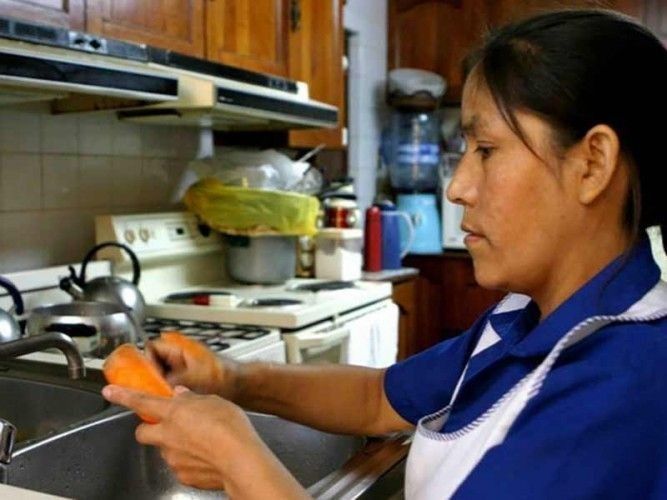

While in many first-world countries having domestic help is considered an unaffordable luxury, in Peru employing a so-called empleada (domestic worker) to take care of cleaning, laundry, cooking, childcare, or even driving you around is quite common. For middle- and upper-class Peruvians - and many foreigners - it is still relatively affordable.
However, if you don’t have the time (or simply prefer not) to handle household chores yourself, it’s important to understand both the legal framework and the common practices of employing a domestic worker in Peru. This helps avoid misunderstandings, disappointments on either side, unintended exploitation (in either direction), and even potential legal disputes.
According to the Peruvian Domestic Workers Law No. 31047, there are two main types of domestic workers:
Domestic Workers Law
- Cama adentro: The domestic worker lives in your home. In addition to salary and benefits as mentioned below, you are required to provide suitable accommodation, meals, and support for further education.
- Cama afuera: The domestic worker lives outside your home and works agreed hours or days - either full-time or part-time. It is customary to provide a meal during working hours (either food to prepare themselves or a small additional payment for lunch).
Table of contents
- Contract or no contract?
- Wages of domestic workers in Peru
- Working hours, rest time, and holidays
- Bonuses and benefits
- Termination of employment
- How to register a domestic worker
- Some final thoughts
Contract or no contract?
Peruvian law does not differentiate between full-time and part-time domestic workers. Legally, all domestic workers have the right to:
- A written employment contract
- Registration in the Domestic Workers Registry of the Ministry of Labor and with SUNAT
- Social security coverage (health insurance through EsSalud and pension contributions)
- Certain benefits (explained below)
In reality, however, only an estimated 10% of domestic workers are officially registered.
Even for part-time help, having a simple written contract is highly advisable. It clearly defines the rights and responsibilities of both parties. For full-time workers, a written contact, proper registration and payment of all required contributions is not only recommended, it’s the right thing to do.
That said, you may encounter domestic workers who prefer not to be formally employed. This is quite common, especially for those working only a few hours per week in multiple households.
Still, regardless of registration status, it is generally expected to pay certain bonuses in line with labor law, even to part-time and unregistered workers.
If you agree not to register your empleada and therefore do not pay health insurance, make sure they are covered elsewhere (for example, through a family member). Otherwise, if an accident occurs while working in your home, you may be held financially responsible.
Wages of domestic workers in Peru
Since January 2025, the official minimum wage in Peru is S/ 1130 (a bit over US$ 300) per month for full-time employment. In Peru, full-time employment is defined as 8 hours per day, 6 days a week, totaling 48 hours weekly. However, domestic workers’ salaries are not strictly tied to this minimum wage and are usually negotiated individually; unfortunately, often below the official minimum.
That said, paying a fair wage is essential. But what is “fair”? While wanting to value the hard work with a generous salary is understandable, it’s important to stay realistic within the local context and avoid overpaying or being taken advantage of.
Additionally, salaries vary significantly depending on:
- Location (Lima vs. provinces; and within Lima by district)
- Duties (cleaning, cooking, childcare, etc.)
- Experience and qualifications
- Size of the household
For example, in districts such as La Molina, San Isidro, Miraflores, or Surco, wages are generally higher than in Jesús María, Breña, or Ate. Likewise, having a studio apartment cleaned is considerably less expensive than maintaining a four-bedroom house. And, of course, hiring a young, inexperienced worker will usually cost less than employing someone with years of experience.
To give you a general idea about salaries of domestic workers in Lima, here some average monthly wages for full-time employment:
- Cleaning and laundry: around S/ 1600
- Cleaning, laundry, some cooking and/or childcare: around S/ 1800
- Nanny (childcare only): around S/ 1800
- Skilled cook (3 meals/day, international cuisine): S/ 1800 – S/ 2000
Wages in Peru are usually paid twice per month (1st and 15th), either in cash (a receipt is recommended) or via bank transfer.
Part-time workers:
- Hourly rate: approx. S/ 12 - S/ 14
- 8-hour day: S/ 90 – S/ 120
- 4–5 hours: S/ 60 – S/ 70
It’s common to provide lunch (either food to prepare themselves or a small additional payment for lunch) and cover transportation costs (around S/ 3 - S/ 5). Agree on these details in advance.
Also, don’t be surprised if your empleada prefers wearing a uniform or apron, usually paid by you.
Working hours, rest time, and holidays
Full-time domestic workers:
- must be at least 18 years old.
- only work up to 8 hours per day.
- work a maximum of 48 hours per week.
- are entitled to 24 consecutive hours of rest per week.
After one year of employment, they are entitled to 30 days of paid vacation.
If employment ends before completing a full year, the worker is entitled to proportional compensation (2.5 days of salary per month worked).
For part-time workers, these rules are often not or more flexibly applied. However, if someone works regularly for you (e.g., every Monday, Wednesday, and Friday), proportional vacation may be expected. It’s best to clarify this upfront.
Public holidays:
If a domestic worker agrees to work on a public holiday, they are entitled to either:
- regular daily pay plus 50%, or
- a replacement day off plus 50% of the daily wage
Bonuses and benefits
Gratificación - July & December bonus
Domestic workers are entitled to a gratificación twice a year equal to 50% of the monthly salary
- for Independence Day in July, and
- for Christmas in December.
The bonus must be paid in the first half of July and in the first half of December. If the worker hasn’t completed a full six-month period, the bonus is paid proportionally.
Important:
Not only officially registered domestic workers are entitled to this bonus; unregistered full-time and part-time employees, even those working just a few hours per week, generally consider themselves entitled to it under the domestic workers’ labor law (a view supported by the Ministry of Labor). Therefore, it’s advisable to calculate your empleada’s average monthly earnings and pay at least 50% of that amount as a bonus.
CTS - Severance pay
Domestic employees are additionally entitled to the so-called CTS (Compensación por Tiempo de Servicio - Compensation for Time of Service). CTS is a form of severance pay, equivalent to half a monthly salary per year worked.
It can be paid annually at the end of December or upon termination. If accumulated, it must be paid within 48 hours after termination based on the last salary.
In case employment ends before completing a full year, the worker is entitled to proportional compensation.
While mandatory for registered workers, unregistered, part-time and especially hourly workers may not always expect it - clarify this early on to avoid disagreements.
Compensation Law for Time of Service
Health insurance (EsSalud) and pension (SNP/AFP)
For officially employed and registered domestic workers, employers must contribute:
- 9% of salary to EsSalud health insurance
- 13% of salary to a pension system, either public SNP (Sistema Nacional de Pensiones) or private AFP, which numerous Peruvian insurance companies offer
Registration must be completed within 30 days of employment.
For unregistered empleadas contributions to the Peruvian social security system are not applicable. And be aware that it’s not uncommon for some domestic workers to decline formal registration - often arguing that they are already insured through a family member - while at the same time requesting an additional amount equivalent to what the employer would otherwise pay for health insurance and pension, on top of the agreed salary. Whether you want to agree to such an arrangement is entirely up to you.
Termination of the employment relationship
Both, the employer and employee, can terminate the employment relationship with a 15 days’ notice. If the employee resigns, the employer can release the employee from work immediately if agreed upon. However, if the employer terminates the relationship, he must either employ the domestic worker for another 2 weeks or can terminate immediately by paying an amount equal to 15 days’ worth of salary.
Don’t be surprised that even if you as employer terminate the relationship due to a serious misconduct, you are expected to pay the 15 days’ notice to be able to fire your empleada immediately and above-mentioned bonuses and benefits.
How to register a domestic worker and pay social security contributions
If you agreed to officially employ your domestic worker, put a contract in place detailing the rights and obligations of both parties.
Then register your empleada at SUNAT. This can be done in person at any SUNAT office in Peru. You will need your passport with a valid visa or your Carné de Extranjería (original and copy), a power, water or phone bill showing your address, your domestic worker’s DNI (Peruvian ID, original and copy) and in case they aren’t already inscribed in the social security system, the DNI of your domestic worker’s children and spouse (original + copy). Usually the SUNAT staff is very friendly and helpful and will guide you through the process and forms that have to be filled in.
For a couple of years now, you as well can register your domestic worker online on the SUNAT webpage. The process to register your empleada with SUNAT and social security online is described in detail in the PDF that you can find in the attachment section at the end of the article. To use this online system you need the so-called Clave SOL which only can be applied for online if you have a Peruvian ID. So, you as a foreigner have to visit the nearest SUNAT office anyway to get the Clave SOL and with not being familiar with the whole process it might be easier to then do the initial registration process in person and after everything is in place switch to the online system.
For paying the EsSalud and pension contributions, you don't need to fill out any forms anymore. Since 2012. payments can be made at branches of Interbank, Scotiabank, BBVA, BanBif and Banco de la Nacion just with the inscription code (CIE, issued by SUNAT after registration) of your domestic worker (you should know the exact amounts you have to pay) or if you are using the online system through the virtual form 1676.
Some final words ….
Unfortunately, many domestic workers in Peru are underpaid and treated badly. Please pay a for Peru fair salary and treat your helper with respect. There are thousands of honest and hardworking domestic workers in Peru that just try to earn a living and deserve so.
But sadly, as everywhere there are a few bad apples. Being late or not showing up for work aren’t uncommon occurrences and thefts, even of groceries, aren’t unheard of. So, if you suddenly need double or triple the amount of sugar or toilet paper, for example, you should begin to wonder; if valuables are missing you should act immediately.
Be also aware that your standard of cleanliness and tidiness might be different from your empleada's and that her or his education approach with your children won’t match with yours. While often a friendly conversation helps to overcome differences, sometimes an employer including the family and a domestic worker just don’t fit. Then it’s better to go separate ways.
Be as well prepared that your empleada might ask you for (financial) help at one time. Money often is tight and if an unexpected financial burden, for example, a treatment of a sick child or family member, has to be conquered or expected high expenditures, such as school re-inscription fees or school materials, have to be paid, you might be the first to be asked for help. If you are willing to do so and to what extent is surely up to you.
If you want to help, but aren’t happy to just hand out money, you could always offer to alleviate the burden by buying the school books or school uniform or other school materials for one of your empleada’s children or by visiting the sick child or family member at the hospital and buying a prescribed medication. If this isn’t welcome or you are regularly asked for financial support, you should become suspicious and question the real motive of your empleada’s requests.

Labor Regulations Peru
If you found one of these rare gems that fits into your household and does all the chores to your satisfaction, treasure and treat him or her like family.