
5 Comments
Finding a job and working legally in Peru

Finding a job and working legally in Peru

Important information when looking for a job in Peru

Peru is a beautiful country, the economy is booming, employment opportunities are everywhere, and living expenses are low - easy-peasy, right? At least that’s the impression some articles about emigrating to Peru and working here like to give.

Sorry to burst the bubble, but reality is usually more complex.

Sorry to burst the bubble, the reality unfortunately is anything like this, 

Yes, Peru is an amazing country with many opportunities. However, even before Covid, Peru was never an ideal immigration destination for people seeking stable employment with a strong income, especially if they need to support a family. Over the years there have been improvements, and besides Latin Americans, more North Americans, Europeans, and Asians are coming to work in Peru. Still, uncertainties remain, and Peru’s economic and political future is not always predictable.


Table of Contents


Where in Peru are the jobs

If you are considering a permanent move to Peru, there are a few realities to keep in mind.

Working in Peru often means longer hours, lower pay, and fewer benefits than you may be used to.

Living costs in smaller cities and rural areas are certainly lower than in North America or Europe. However, jobs for foreigners are scarce (with some exceptions in the mining sector), wages are often very low, and infrastructure such as schools, hospitals, shopping options, and cultural offerings may be limited.

Most people who need to earn a living as employees head to larger cities or tourist hubs like Cusco, Arequipa, Trujillo, Chiclayo, or especially Lima. With over 10 million inhabitants, Lima is Peru’s financial, economic, and cultural center.

While infrastructure in these cities can compare well in parts with North America or Europe, wages remain significantly lower. At the same time, living costs - particularly in safe and comfortable neighborhoods - can easily reach first-world levels.


Legal background when looking for a job in Peru

Even if you are highly qualified and speak Spanish (which is a major advantage), finding employment is rarely easy.

Tourists are not allowed to work or receive payment for professional activities in Peru. To work legally, you need a work visa (or another resident visa allowing you to work, such as a family visa). The most common and successful route is being hired by a Peruvian company that sponsors your visa.

However, regulations for employing foreigners are strict. By law, a Peruvian company may employ only up to 20% foreign staff, and these employees together may not receive more than 30% of the company’s total payroll. Companies must also fully disclose financial and payroll information to SUNAT and Migraciones.

Because of this, many employers hesitate to hire foreigners without residency and work permission. They can usually find qualified Peruvians willing to work for lower salaries and with less administrative hassle. 

Note:
Foreigners married to a Peruvian who already hold a Peruvian family visa, as well as foreigners with permanente residente status, are considered “exonerated workers.” Certain employment regulations therefore do not apply to them. Similar exemptions also apply to employees from Colombia, Bolivia, Ecuador and Spain.

Another option is to work in Peru as an independent service provider. Since 2017, the country offers a “trabajador independiente” (independent worker visa). This allows freelancers to work legally, but you must provide services to a Peruvian company under a service contract valid for at least 12 months. You find more info in our Work Visa article.

Peruvian Work Visa

Peruvian Visa Types
Foreigners who have a valid and legally signed work contract with a Peruvian company that was approved by the Peruvian Labor Ministry or who have a...

Another route is establishing a Peruvian company and employing yourself as general manager. This requires a Peruvian partner holding a small share. Professional legal advice and support is strongly recommended.

Note:
Even though internet availability, reliability, and speed in Peru aren’t always ideal, working remotely can provide an income that comfortably supports a life here - often earning you significantly more than a local position with a Peruvian company would. However, remote work by itself does not grant you residency in Peru. Back in November 2023, a new Foreigner Law was published that, for the first time, introduced the concept of a resident visa for digital nomads, remote workers, and freelancers. Unfortunately, the corresponding administrative regulations have still not been issued, so the visa isn’t available yet. We remain hopeful that this will change soon. You can find more details in our article “Peruvian Digital Nomad Visa.”

Peruvian Digital Nomad Visa

Peruvian Visa Types
On November 14, 2023, a modification of the Foreigner Law, Decreto Legislativo 1582, was published, introducing a resident visa for digital nomads,...


How to find work in Peru

Starting your job search while still in your home country is the safest approach. It offers financial security and allows you to arrive with a visa and income from day one.

Finding work in Peru from abroad

The ideal scenario is working for a foreign company that transfers or hires you for a role in Peru. Salaries and benefits are often closer to home-country standards and may include relocation support, housing, insurance, or school fees.

These opportunities are rare and usually reserved for senior positions or government assignments.

So, to explore the Peruvian job market and find work, use professional networks LinkedIn and job portals such as Indeed Peru, CompuTrabajo Peru, Addeco Peru, Laborum Peru, Trabajando Peru, Jobomas Peru, Devex, Aptitus, Bolsa Laboral Lima.

Another option is to check out international companies with Peruvian branches, which often list openings on their websites. And the Chamber of Commerce of your home country in Peru can also have useful contacts. 

Last but not least, the hospitality and tourism sectors have largely recovered and can offer opportunities for qualified candidates.

Finding work when already in Peru

Most people who plan to move to Peru and work here first enter the country as tourists and then try to find a job locally. However, as mentioned earlier, it isn’t an easy undertaking to simply arrive in Peru and secure employment within the limited time you are allowed to stay as a visitor. For this reason, it is highly advisable to have sufficient funds to support yourself for an extended period while you are job hunting. And just in case things don’t work out as planned, it’s wise to either keep a return ticket on hand or set aside enough money so you can purchase a flight back home at any time.

A good starting point for a job search in Peru is networking. Many positions are never advertised online or in newspapers but are filled through word of mouth. Knowing people who know the right people and making yourself and your skills known still plays a very important role in the Peruvian job market.

The expat community in Peru, which you can easily find through a simple online search or on social media, is generally welcoming and supportive. Their websites and social media pages sometimes even feature job postings or leads that you might not find elsewhere.

Many vacancies are also still published in traditional print media. Each Sunday, El Comercio, Peru’s oldest and largest daily newspaper, features an extensive job section in its Aptitus supplement. While Aptitus is also available online, not every listing from the print edition makes it to the website, so the physical newspaper can still be worth checking.

Online job portals such as Indeed Peru, CompuTrabajo Peru, Adecco Peru, Laborum Peru, Trabajando Peru, Jobomas Peru, Aptitus, and Bolsa Laboral Lima can be helpful for identifying openings and companies in your field. Still, if possible, visiting a company in person can sometimes be more effective, as e-mails and online applications are often overlooked or left unanswered.


What jobs are in demand in Peru?

This changes with economic conditions. Competition is strong, and many positions are filled locally.

Anyway, be aware that most administrative positions and lower-level jobs are typically filled by locals who are willing to work for a fraction of what you might consider fair pay. This is simply the reality of the local labor market. However, if you bring special qualifications — for example, fluency in a foreign language that is genuinely needed or valuable for a company — your chances can improve and you might get lucky.

Even though there is demand in certain professions, working in regulated fields such as medicine, law, or parts of architecture usually requires having your qualifications officially validated and your degrees and certifications recognized in Peru. This process can be costly, time-consuming, and unfortunately not always successful, so it’s important to research the requirements in advance.

In the expanding mining, hydro-energy, and oil production and processing sectors, lower-level positions are often filled by locally trained staff, while key expert roles are typically staffed by foreign specialists sent from abroad. If you apply locally for these industries, be aware that salaries are often very low compared to international standards, job sites are frequently in remote areas, and both working and living conditions may differ greatly from what you are used to.

Before the pandemic, the hospitality and tourism sector in Peru was booming. The sector is nearly back to pre-pandemic levels, and if this positive trend continues, professionals in tourism and hospitality - as well as newcomers with transferable skills - may find realistic opportunities.

Qualified technical professionals are also in demand, especially in engineering and IT-related fields. Still, even in these areas, you should generally expect salaries and benefits to be below what comparable positions would offer in North America or Europe.

Over the past two decades, numerous call centers (sales, customer service, and support) have opened in Lima and several other Peruvian cities. They often seek foreigners with strong foreign-language skills. However, not all of them are willing to sponsor work visas, and some may prefer to employ foreigners informally, without a proper contract or legal protections - something you should approach with caution.

Foreign language teachers, particularly English tutors, are consistently sought after. In almost every city in Peru, language institutes hire native English speakers year-round, sometimes even without formal teaching qualifications. That said, these institutes rarely assist with work visas, meaning many teachers end up working without a contract, legal security, health insurance, or employment benefits.

On the other hand, most international schools and universities are keen to hire qualified language teachers. They usually offer more stable conditions, pay comparatively decent wages, and often sponsor work visas for foreign staff. Be prepared to demonstrate your qualifications with a TEFL or TESOL certificate or other relevant diplomas and degrees. Since the academic year in Peru typically starts in March, the best time to apply is between December and February, although midyear openings (June or July) do occasionally arise.


Applying for a job in Peru

Usually, the job offer states how and where to apply. So, as anywhere in the world, if a position interests you and you meet the requirements, just go for it and submit your application.

To prove your professional competence and qualifications, it is advisable to bring at least your highest degree or title. This document usually needs an Apostille - or legalization by a Peruvian consulate and later by the Ministry of Foreign Affairs (RREE) - and must then be translated by an official translator in Peru. Other work-related certificates or diplomas can be helpful as well, but they normally don’t require an Apostille.

If you are still abroad, you might be at a slight disadvantage compared to local applicants. However, modern technology has long reached Peru, and applying by e-mail is common. Interviews via WhatsApp, Zoom, or similar platforms are also regularly conducted.

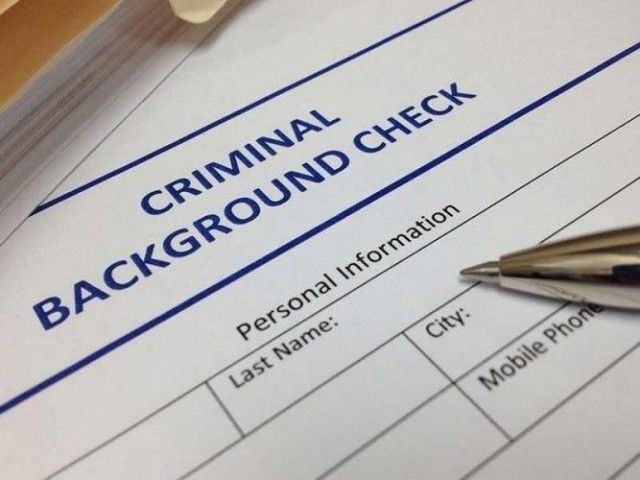
Quite a few companies request a police clearance certificate, either national and/or international. If you are already a resident in Peru you can find detailed information on how to obtain a Peruvian one in our article “Police Clearance Certificate and Criminal Background Check in Peru.”

Foreigners who live or have lived in Peru, as well as Peruvians, are often required to present a police clearance certificate or criminal backgroun...

It is also not unusual for companies in Peru to organize an “application day.” In this case, all interested candidates are invited to appear in person with their application documents at a specific office or even a conference room in a hotel on a set date. Be prepared for long lines and many other applicants competing for the same position.

Even when job offers ask you to send your CV and documents by e-mail, be prepared for the possibility of never hearing back. This doesn’t automatically mean they are not interested. Sometimes e-mails are overlooked, filtered out, or simply remain unanswered. If you want to be sure your application was received, it can help to follow up with a polite phone call to confirm receipt.

If you are eventually invited to an interview with the person in charge, it’s wise-  at an appropriate moment - to clarify your immigration status and whether you would require a work visa. This avoids misunderstandings later on and shows professionalism.


Work contract

You received a job offer? Congratulations!

Before (!!!) signing your work contract (or any other legally binding document) in Peru, while you are in the country as a tourist, you must first obtain a permission to sign contracts. Without this permit, the contract is considered void and won’t be accepted by the Labor Ministry for approval. The good news is that the permit can be requested quickly and easily online. Our article “Permit to sign contracts” explains the process step by step.

Foreign nationals who are in Peru as tourists or hold another temporary immigration status are not allowed to sign legally binding documents unless...

If, however, you entered Peru on a business status, you don’t need this additional permit, as the authorization to sign contracts is already included in that immigration category.

And if you sign a work contract with a Peruvian company while still abroad, make sure the contract is legalized by a Peruvian consulate before traveling to Peru. If the contract is not in Spanish, it must be translated by an official translator in Peru.

Once you have a signed and valid contract, you’ve completed the first major step toward living and working legally in Peru. After that comes the famous red tape - with the ultimate goal of obtaining your work visa.

Peruvian Work Visa

Peruvian Visa Types
Foreigners who have a valid and legally signed work contract with a Peruvian company that was approved by the Peruvian Labor Ministry or who have a...

Note:
Under Peruvian law, you are not allowed to start working until your work visa has been officially approved.


Please note: LimaEasy is not a Peruvian government agency, public authority, or law firm. The information provided is based on our best knowledge and is intended as general guidance to help you understand Peruvian regulations and procedures. Regulations, requirements, and administrative practices may change at any time and without prior notice, so we recommend verifying current details with the relevant authorities before acting on this information.

And last but not least: If you notice any inaccuracies or outdated information on this page, please help us keep this guide up to date by leaving a comment below or contacting us via our contact form. Thank you for your support!

Say something here...
characters left
or post as a guest
All comments MUST be in English and will be moderated before publishing.
They will appear below within 24 hours.
Loading comment... The comment will be refreshed after 00:00.
  • This commment is unpublished.
    Bonface Luchombo · 12/09/2025
    Hi am Bonface from kenya am looking for a job in hospitality industry house keeping with experience of 7 yrs can I get
    • This commment is unpublished.
      Sunflower
      • LimaEasy
      · 12/09/2025
      @Bonface Luchombo
      Hello Bonface,

      with tourism picking up again there is an increasing number of jobs in the hospitality industry in Peru. However, be aware that regulations for employing foreigners are quite strict in Peru. 

      As there are many Peruvians well qualified for lower-income jobs, such as house keeping, and these can be employed right away without any red tape, finding a company willing to offer you a job could be challenging - but not impossible.

      So, if you really want to work in Peru, you first must find a company willing to employ you and sponsor your visa. As you, as a Kenian passport holder, can't travel to Peru visa-free, once you have a contract your employer, a lawyer or other person in Peru must apply for your work visa. 

      As soon as the visa is approved you must pick it up at a Peruvian consulate (in Africa there are only a few, for example, in South Africa, Egypt, Ghana, Algeria and Morocco) and only then can travel to Peru.

      I wish you all the best.

      Greetings
      Eva
    • This commment is unpublished.
      Bonface Luchombo · 13/09/2025
      @Sunflower Can I apply once I reach in peru with visit visa
    • This commment is unpublished.
      Sunflower
      • LimaEasy
      · 13/09/2025
      @Bonface Luchombo
      Yes, you could enter Peru with a tourist visa and then apply for a work visa once you are in Peru. 

      However, be aware of the following:

      As a Kenyan passport holder you cannot enter Peru visa-free. You first must apply for a tourist visa at a Peruvian consulate (Peru does not offer online tourist visa applications). 

      On the website of the Peruvian Ministry of Foreign Affairs (RREE) you find a world map showing all Peruvian consulates abroad. Just click on a marker and the address, phone number, e-mail and - if available - website of the consulate appears.

      Especially in Africa (and Asia), where the residents of most countries have to apply for a tourist visa before coming to Peru, Peruvian consulates are scarce, website aren’t up-to-date and e-mails often aren't answered. So, finding the correct consulate, getting information and applying for the tourist visa can be quite a challenge. The Peruvian Ministry of Foreign Affairs unfortunately doesn't consistently publish which consulates have jurisdiction over which regions/countries. Therefore, as there is no Peruvian consulate in Kenya, try to get in contact with the one in Ghana or South Africa and ask if they can help.

      Required documents to apply for a tourist visa include, but may not be restricted to:
      - Application form
      - Valid passport
      - Round-trip ticket
      - Hotel reservation, tourist package reservation or invitation letter
      - Proof of sufficient funds
      - Passport photos
      - Proof of legal residency in the area or country under the consulates jurisdiction
      - Receipt for paid application fee
      Please be aware that the consulate, where you apply, will invite you to a personal interview.

      If you manage to get a tourist visa for Peru, you fly to Peru and enter as a tourist. Be aware that even if your tourist visa shows that you are allowed a stay of 180 days you most probably only get 90 days when you enter. As the visa most probably is a multiple entry visa you could leave the country after 90 days and then return. But Peru's neighboring countries all require a visa for Kenyans, so here you have another hurdle to conquer.

      And in the 90 days you are allowed to stay in Peru, it is nearly impossible to find a job and a company sponsoring a work visa, prepare all documents to apply for a work visa and then apply before your time as a tourist runs out. 

      So, if you want to enter as a tourist and then change to a work visa once you are in Peru, I highly recommend to find an employer and have a work contract before coming to Peru and to bring all required documents from your home country - in your case just your criminal record check. Be aware that - as Kenya isn't part of the Hague Apostille Convention - the criminal record check must be certified by the issuing authority in Kenya, then notarized by a Kenyan notary, followed by an authentication by the Kenyan Ministry of Foreign Affairs (MFA) and finally legalized by a Peruvian consulate. 

      All the best
      Eva

  • This commment is unpublished.
    Lorena · 04/08/2025
    Hello! I have a question here. My husband is about to start the process for the Carnet de Extranjería but his work contracts needs to be signed shortly. Is there a way he can request a 'permiso de trabajo extraordinario'' or something similar until the Carnet arrives? Thank you!!

    • This commment is unpublished.
      Sunflower
      • LimaEasy
      · 04/08/2025
      @Lorena
      Hello Lorena,

      I'm confused. Why would your husband need a permiso de trabajo extraordinario, which you only can apply for if you have a student visa or a religious visa, if he presumably is in the process of applying for a work visa? The work visa includes the permission to work in Peru for a Peruvian company.

      And before he gets his carné de extranjería, which is an ID card proving that he is a legal resident, he must apply for his work or other residence visa. So, once the work visa is approved, he gets his carné. You find detailed information about the whole process in our Work visa article

      If your husband is about to sign a work contract in Peru, be aware that - if he is in Peru as a tourist - he first must apply for a permit to sign contracts (permiso especial para suscribir documentos). How it's done is explained here

      As soon as he has the permit he can sign the contract, have it approved by the Peruvian Labor Ministry and then apply for a work visa. 

      Be further aware that officially your husband is only allowed to start working when his work visa is approved. However, many companies find a way around this little hurdle and let their new employee start working on the date specified in the contract.

      Just a thought: are you Peruvian? If so, it might be much easier and quicker that your husband applies for a family visa, which "includes" a permission to work. 

      Greetings
      Eva
    • This commment is unpublished.
      Lorena · 05/08/2025
      @Sunflower Hi Eva, thank you for your recommendations! Yes, I'm Peruvian and my husband is applying to the Family visa, but he is just now having the INTERPOL appointment this Thursday. Immediately after he will start the online process in the Agencia Digital for the visa. However, the problem is that his company from the Netherlands has his contract via Remoteok already waiting to be signed, so I was wondering if while we wait for the official acceptance  (ready in 30 working days, rights) there is something he can do... or he just have to wait? They asked for the Carnet de Extranjería or some document that is in process. Is requesting the Permiso para Firmar Contratos an option? do you know? thank you in advance! 
    • This commment is unpublished.
      Sunflower
      • LimaEasy
      · 05/08/2025
      @Lorena
      Hello Lorena,

      forget most of what I wrote above. Everything I wrote about the work visa doesn't apply to your husband's situation as your husband won't be employed by a Peruvian company. He as well won't need the permit to sign contracts as his contract is not with a Peruvian company or used at Peruvian authorities. 

      With this being said, with the family visa your husband can legally live in Peru and if he wants can work for a Peruvian company, but as well remote. So, he won't have any problems once his family visa is approved and he has his carné. 

      However, as explained above, as a tourist, which he most probably is at the moment, he cannot apply for a work permit or something similar. As long as he is in Peru as a tourist and hasn't applied for his residence visa nothing he can do. Sorry. 

      One thing I don't understand: Why is the company from the Netherlands / Remote OK asking for his carné? Wouldn't it be possible that he signs the contract on his passport / with his foreign address and once his family visa is approved and the carné issued change it?

      If not, the only thing he can do is prepare all required documents for the cambio de calidad migratoria a familiar residente casado con peruana, have his Interpol appointment (he will get the Ficha de canje immediately),  and then apply for the cambio on the Agencia Digital afterwards. 

      The actual application on the Agencia Digital takes about 20 minutes or so (plus, another 20 minutes if he hasn't registered his personal data before). Once he finished the application, he gets the Registro de Solicitud de Cambio de Calidad Migratoria document, which is the proof of his application. Probably the company is happy with that? Or once he finished the application he can - under the Historial tramite menu point - make a screenshot of a page where his application shows as "in process". 

      If the company isn't happy with this, all he can do is wait until his visa is approved. Officially (!!!) Migraciones has 30 business (!) days, so 6 weeks, to approve or deny an application. But on average waiting times at the moment are 2 to 3 months (but if he is lucky he might already hear back after 2 or 3 weeks or, if MIgraciones is busy at the moment he might have to wait 3 or 4 months). 

      All the best

      Eva
  • This commment is unpublished.
    Jordan · 03/07/2024
    I have some questions about this:
    > Additionally, for some time now, it is possible to set up a Peruvian company as a foreigner (be aware that you need a Peruvian (silent) partner who owns a small percentage), then employ yourself as the general manager, get your contract approved and apply for a work visa.

    Looking at the different types of company available:
    https://www.gob.pe/254-tipos-de-empresa-razon-social-o-denominacion
    one of the options is Empresario Individual de Responsabilidad Limitada (E.I.R.L.), which is basically a company that consists of a single person.

    So is it possible to go through this process by setting up an E.I.R.L. and hiring myself to get a work visa? Hence would it be possible to do this without needing a Peruvian (silent) partner?

    (Obviously I am a foreigner).
    • This commment is unpublished.
      Sunflower
      • LimaEasy
      · 03/07/2024
      @Jordan
      Jordon, I'm not the best person to give advice in this area. As already mentioned above in the article, if you want to create your own company in Peru and employ yourself to then get a work visa, I highly recommend to have a talk with a professional in this specific field, such as an experienced immigration lawyer or notary in Peru.

      Greetings
      Eva
  • This commment is unpublished.
    roshan saji · 17/06/2024
    i need a job i peru 
  • This commment is unpublished.
    Akuforozo Samurai Angela · 12/06/2024
    I love Peru and I will like to get a job in peru

Peru Newsflash

Peru Event Calendar

Mon Tue Wed Thu Fri Sat Sun
1
2
3
4
5
6
7
8
9
10
11
12
13
14
15
16
17
18
19
20
21
22
23
24
25
26
27
28
29
30
31

Latest Content...

Latest Video

Maria Reiche - Memories

Maria Reiche - Memories

Submitted by: Tintin
05 December 2021

Long Reads...

  • Peruvian Archaeology

    The Mystery of the Nazca Lines in Peru

    In the 1920s, when people first flew across southern Peru, they made an astonishing discovery. Stretching below them,…
  • Peruvian Personalities & Founders

    Francisco Pizarro González (1474-1541)

    Francisco Pizarro, a peasant from Spain, was one of the least well-equipped conquerors in history. However, in the name…
  • Peruvian Archaeology

    The colorful Fabrics and Textiles of Peru

    Europe’s first knowledge of Peruvian textiles was acquired following the Spanish invasion of Peru in 1532, when the…
  • Peruvian Legends, Myths & Tales

    The Jeweled Frog and the Condor

    By a quiet pond, at the side of a cloud-topped mountain in Peru, lived a small green frog and his large green family.…
  • Peru Info

    Peruvian Economy

    The Peruvian economy is an emerging, social market economy highly dependent on foreign trade and classified as an upper…