

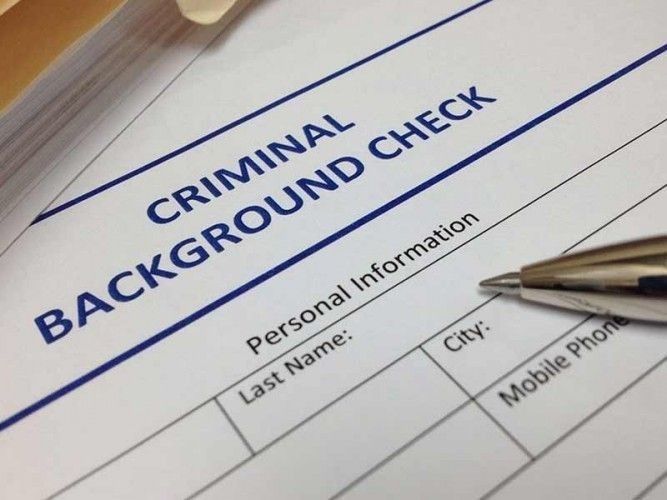
Foreigners who live or have lived in Peru, as well as Peruvians, are often required to present a police clearance certificate or criminal background check from Peru for job applications, visa and immigration processess, academic and other official procedures in Peru and abroad. These certificates are called Antecedentes Policiales, Penales y Judiciales.
Depending on the purpose, Peruvian authorities issue three different background certificates that confirm whether a person has a police record, criminal record, or judicial history in Peru. Knowing which certificate you need and how to obtain it can save you time, money, and unnecessary stress.
In this guide, we explain the differences between the Certificado de Antecedentes Policiales, Penales y Judiciales, who needs which document, and how Peruvians and foreigners can apply for them in Peru or from abroad.
Table of contents
- Certificado de Antecedentes Policiales
- Certificado de Antecedentes Penales
- Certificado de Antecedentes Judiciales
Certificado de Antecedentes Policiales
Peruvian Police Clearance Certificate
The Certificado de Antecedentes Policiales (Police Clearance Certificate) is issued by the Peruvian National Police (PNP) after a background check. It states whether a person has had registered encounters with the police, was involved in criminal activities, or is under investigation.
This certificate is commonly required for:
- job applications in Peru or abroad
- visa and immigration processes
- academic or professional procedures
- administrative requests in Peru
- permits for tinted car windows
Note:
There are two versions of this certificate: one for use inside Peru and one for use abroad.
Requirements
Paying the fee to obtain a Peruvian Police Clearance Certificate
The first step is paying the corresponding fee at the Banco de la Nación.
For national use
- S/ 5.40 for online/virtual application
- S/ 8.50 for in-person application
Peruvians can pay at any Banco de la Nación branch or via pagalo.pe under Policía Nacional del Perú (PNP) using code 08116.
Foreigners with a carné must pay at a Banco de la Nación branch and then apply in person at a police station (comisaría). Make sure the teller gives you the form to complete and present later.
For use abroad
- S/ 133.28
Payment only at Banco de la Nación branch. Again, ensure you receive the required form.
How to get a Peruvian Police Clearance Certificate
Peruvians:
- Online:
Peruvians can apply for a Police Clearance Certificate online on the website of the Peruvian National Police.The website is known for being "particular" and generally only works from within Peru. If you are in Peru and using a VPN set to another country, turn it off. If you are outside Peru a VPN set to Peru may work - sometimes it does, sometimes it doesn’t. Additionally, do not use automatic translation tools, disable ad blockers and avoid incognito/private browsing modes. - At selected Banco de la Nacion branches:
Some Banco de la Nacion branches are connected to the police database and can issue the certificate within a few minutes after fingerprinting - but only if you hold a Peruvian DNI. A list of authorized Banco de la Nación branches is attached as a PDF at the end of this article. - At police stations with a CERAP division:
If your payment branch isn’t authorized to issue certificates or if you paid using pagalo.pe, visit a police station with a CERAP division. - At MAC centers:
In Lima and other major cities, you can also visit a MAC center. Examples include:- MAC Lima Norte (Plaza Norte, Av. Alfredo Mendiola 1400, ground floor, at the intersection of Av. Tomás Valle and Panamericana Norte, Independencia)
- MAC Lima Este (Agustino Plaza, Av. Áncash 2151, El Agustino)
- MAC Ventanilla (Municipalidad de Ventanilla, Av. La Playa s/n, near the Zona Comercial, in front of Plaza Cívica, Ventanilla)
- MAC Callao (Mall Plaza Bellavista, Av. Óscar Benavides 3866, basement level 1, Urb. El Águila, Bellavista, Callao)
- MAC Piura (Real Plaza, Av. Sánchez Cerro 234, Piura)
- MAC Arequipa (Mall Aventura Porongoche, Av. Porongoche 500, Arequipa)
When visiting a police station or MAC center, present your DNI, the payment receipt, and the completed form, ideally with copies of each document. You will be fingerprinted and typically receive your Police Clearance Certificate for national use within a few minutes. Certificates for international use are usually available within 24 hours. Don’t forget to bring your ID when picking up the certificate.
Foreigners:
In Lima, foreigners can only apply for a police clearance certificate at the police station on Av. Aramburú.
Expect long lines and arrive early. Bring:
- Carné de Extranjería
- payment receipt
- completed form
- copies of everything
Once it’s your turn, submit your paperwork and complete fingerprinting. Staff will inform you when your certificate is ready for pickup, which is usually the next day.
In other Peruvian cities, usually only one designated office - often a Dirincri PNP office - handles police certificates for foreigners.
From abroad:
If you are no longer in Peru, you have two options:
- Grant power of attorney:
You can grant someone in Peru a power of attorney to request the Police Clearance Certificate on your behalf (this usually applies only to certificates for international use). - Contact a Peruvian consulate or embassy:
Alternatively, you can contact the nearest Peruvian diplomatic mission abroad. According to the Peruvian Ministry of the Interior, consulates and embassies can guide and assist you with the process.
Certificado de Antecedentes Penales - Peruvian Criminal Record Check
The criminal record check is done by Peruvian Courts, the Poder Judicial. The record shows if a person was ever convicted of a crime in a Peruvian court or not; so it’s an official document of the criminal history of a person limited to actual convictions.
It is used, for example, when applying for a new job in Peru or abroad or when applying for a resident visa in other countries and may also be relevant for international travel.
Requirements
- DNI for nationals
- Carné de Extranjería (CE) for foreigners
- Payment receipt
How to get a Peruvian Criminal Record Check
While for years getting the report showing if you have convictions in Peru or not included queueing first at a Banco de la Nación branch and then at the corresponding court, now everything can be done online from your PC, tablet or smartphone - at least if you need the criminal record check for use in Peru.
Those needing the criminal record check for the use abroad still have to go to the authorized office at the court.
First you have to pay the fee of S/ 52.80 (2025) for the administrative procedure "Certificado Antecedentes Penales” under Poder Judicial code 03670 either on the pagalo.pe website or at any Banco de la Nación branch.
You can find detailed explanations about how to pay, what you have to do and be aware of, how to register on the online payment platform and how to find the correct fee you have to pay, in our article "Paying administration charges and processing fees in Peru".
How to get a Peruvian Criminal Record Check - for use in Peru
Enter the website of the Poder Judicial del Peru under “Trámite de Certificado Electrónico de Antecedentes Penales” and click on “Nuevo Tramite”; enter your personal data on the next page and then the information of the bank receipt.
The processing time is usually anything between a few minutes up to half an hour. You can then download and print the digitally signed electronic certificate. The certificate is valid for 90 days.
How to get a Peruvian Criminal Record Check - for use abroad
Those that need the certificate for international use have to pay the authorized office of the nearest court a visit (a list is attached as PDF at the end of this article).
After providing your identification and payment receipt (bring copies of both) your Certificado de Antecedentes Penales is usually issued immediately but may take up to 30 minutes. The certificate is valid for 90 days.
How to get a Peruvian Criminal Record Check - from abroad
If you aren’t in Peru anymore and need the certificate in your country of residence, contact the nearest Peruvian Consulate. They have access to the system and usually issue the certificate within a few minutes.
Certificado de Antecedentes Judiciales - Peruvian Judicial Background Record
The Judicial Background Record is issued by the National Penitentiary Institute (INPE) and shows if a person has been incarcerated in any Peruvian jail or has done community service as part of a sentence. The record details the exact time spend in prison as well as the sentence and other important judicial entries.
The Certificado de Antecedentes Judiciales might be requested by potential employers, when applying for a visa for another country, for a credit card or for study abroad programs.
Requirements
- Be over the age of 18
- DNI for Peruvians
- Carné de Extranjería (CE) for foreigners
- Payment receipt
How to get a Peruvian Judicial Background Report
First, you have to pay the corresponding fee of S/ 37.70 (2025) for the administrative procedure at any Banco de la Nación branch or at pagalo.pe under INPE code 00044.
Peruvians (except they were born abroad) and foreigners (with CE or PTP) can request the certificate online and receive an electronic certificate, usually within a few minutes. Just follow the link, click on "Tramite Virtual" and follow the instructions filling in the requested fields.
If you need an original printed copy of the Judicial Background Report you have to visit the nearest INPE office. As far as we are aware, the only INPE office that issues the certificates for foreigners in Lima and Callao is the one on Jr. Lampa 450 in the city center.
Once there, present your identification and payment receipt (bring copies of both) and a carné sized photo. If you haven’t been incarcerated in Peru, the Certificado de Antecedentes Judiciales is usually issued within the next 30 minutes..
The Judicial Background Certificate is valid for 90 days.
Please note: We from LimaEasy are not a Peruvian government agency, a public authority or (immigration) lawyers. All information is published to our best knowledge and should be seen as general guidance introducing you to Peruvian regulations and procedures. All information is subject to change, as regulations, requirements, and processes can change quickly without prior notice!
And if you find something wrong on this page, please help us to keep this guide as up to date as possible and contact us either below with a comment or use our contact form. Thank you!